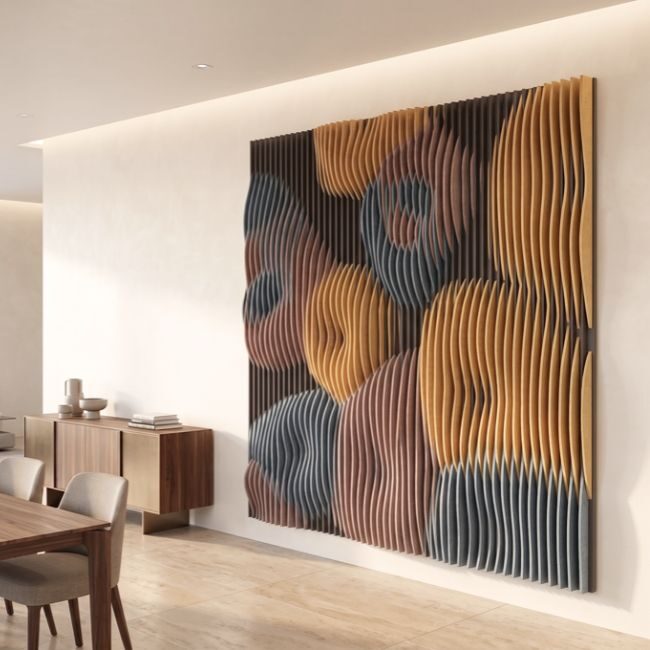
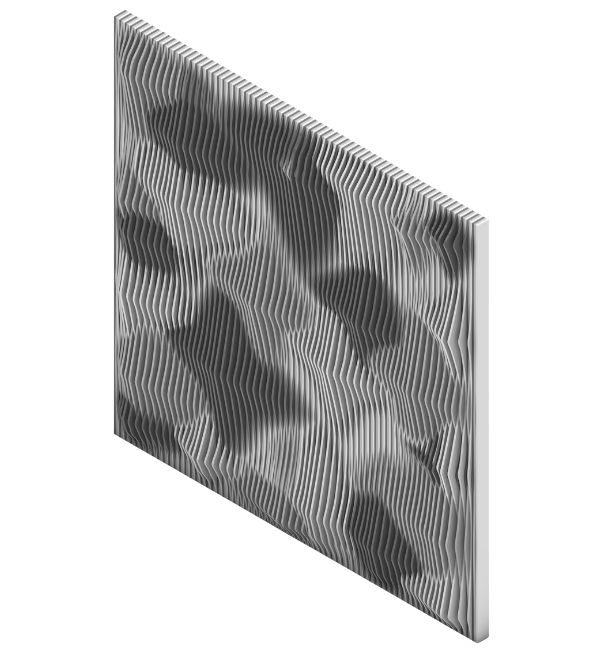
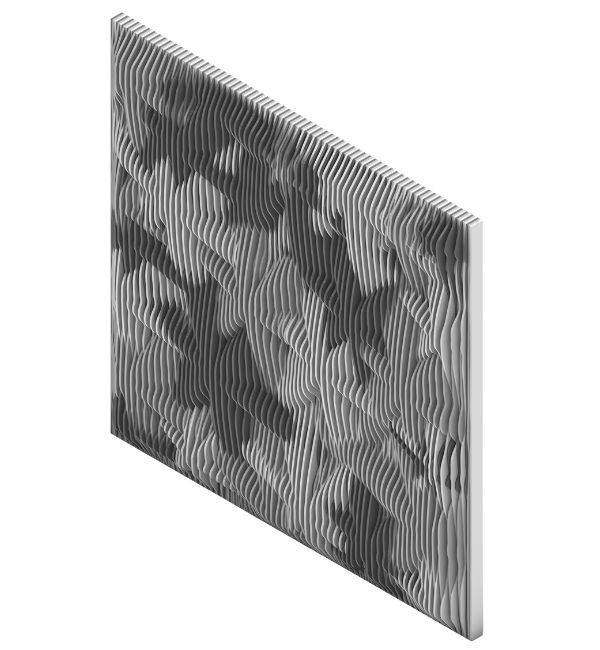
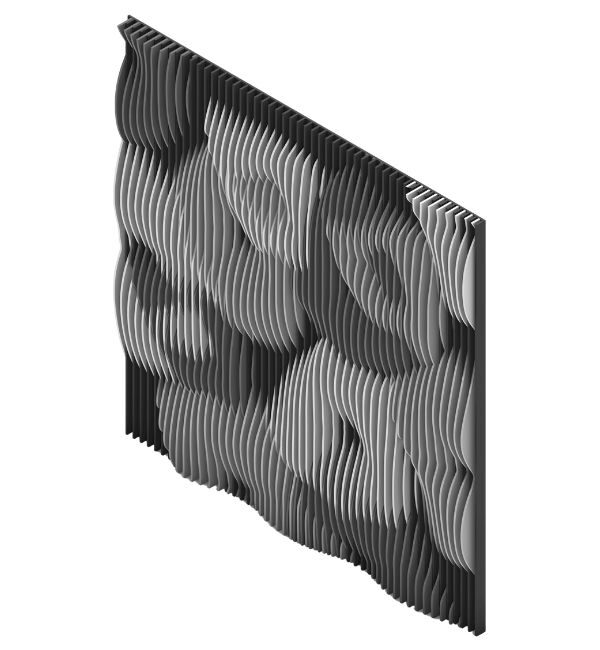
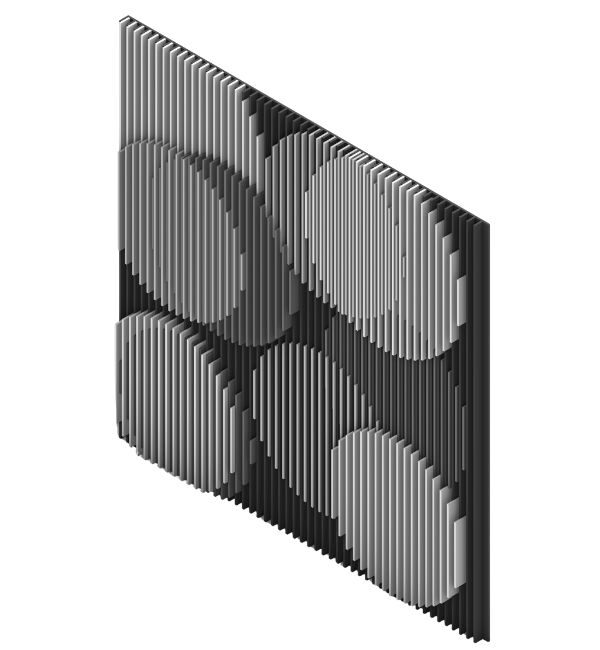
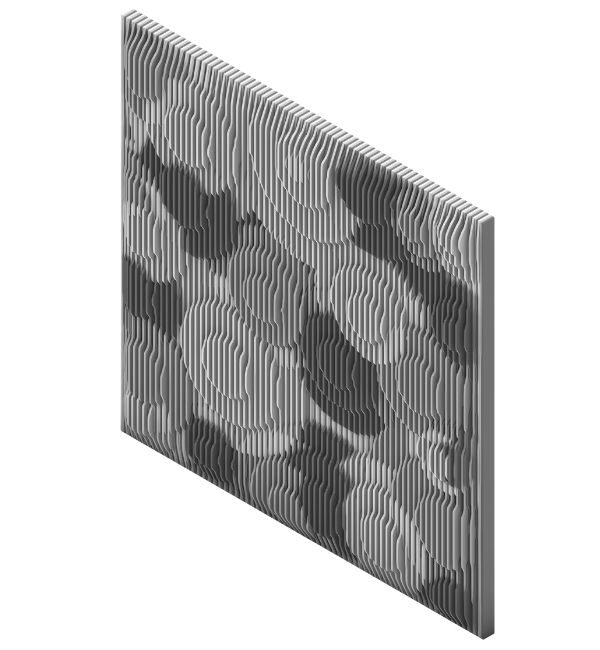
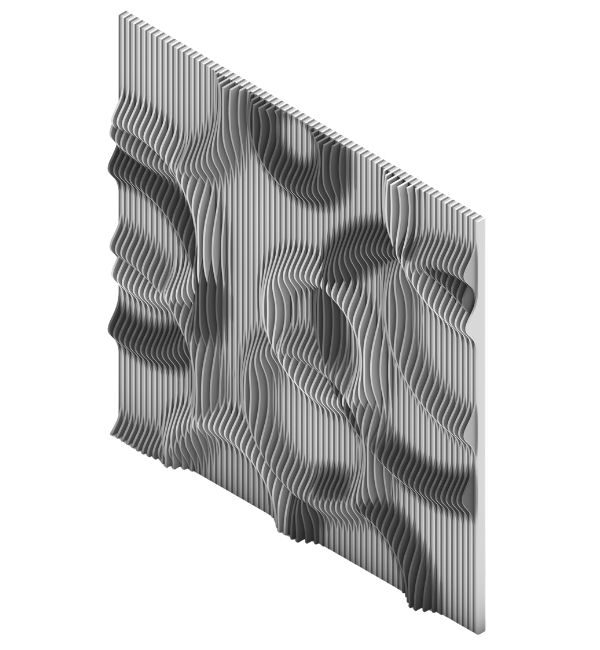
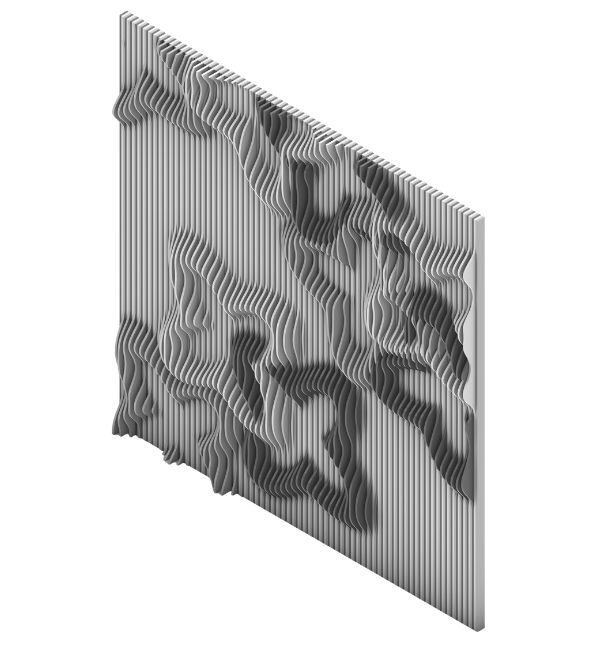
Closely packed PET felt fins come together into one sculptural surface, with real depth, texture, and acoustic performance built in. Curves and contours shift across the wall, giving a soft material the kind of architectural presence usually reserved for hard surfaces.
Most parametric acoustic walls space their fins apart. Monolith doesn’t. The fins sit close together, forming a continuous relief instead of a repeating pattern, circles, flowing contours, and other dimensional forms emerge from the surface itself.
Step back and you see the composition. Step closer and you see the felt, the layering, the colour relationships, the part most walls don’t have.

Same material, different direction every time. A rounded design gives a space a quiet focal point. A more defined geometric pattern gives it rhythm and edge.
Â
Browse the collection and find the one that matches the room you’re building.
Monolith is made from High Density Architectural Acoustic PET Felt, built for superior acoustic performance, not just texture. The tactile surface and fin profiles create depth and shadow, while the felt itself does the work of absorbing sound.
Panels ship preassembled, in modular sections. That modularity is what makes Monolith practical at scale: large commercial and hospitality spaces can treat significant acoustic area with style, without losing the continuous look of a single composition.
If your project has a specific acoustic target, tell us early, coverage, section layout, and mounting all affect performance, and we’ll factor that into the plan from the start.

A listening room, a meeting space, a reception area, these are rooms where how something sounds matters as much as how it looks. Monolith handles both.
Â
Run it behind a seating area, as a backdrop in a workspace, or across a larger commercial or hospitality space using multiple modular sections. How much area you cover depends on the room and what you need that feature to do, acoustically and visually.
PWM-05
Monolithâ„¢ Orbis
Â
Before we lay out a design, we look at your dimensions, the finishes around it, and anything already on that surface, outlets, fixtures, whatever’s there.
Â
From that, we work out the pattern, how the modular sections are arranged, the colour direction, and how it mounts. That’s what makes the finished composition look intentional, whether it’s one section or twelve.
Nothing gets cut until shop drawings are approved. Once they are, every fin and section is fabricated, checked, and tagged to match its spot in the installation plan. Panels arrive preassembled by section, ready to mount.
Â
You’ll get layout and install guidance specific to your project, and we’ll talk directly with your contractor or installer if that’s useful.
Spacing. Our other acoustic wall designs use open gaps between fins. Monolith packs them tight, which is what creates the continuous relief surface instead of a repeating pattern.
Yes. We'll show you the PET felt colour range and build a palette around your pattern and your room.
Preassembled, in modular sections, They arrive ready to mount, tagged to match the approved layout.
Tell us the target up front. Monolith uses High Density Architectural Acoustic PET Felt for strong acoustic performance, and we'll coordinate directly with your acoustic consultant if you have one, actual results depend on the room, coverage, and section layout.

Yes, just ask for PET felt samples. You'll want to feel the texture and see the colours in person before locking anything in.
Design refinement occurs during the proposal phase. Once scope and shop drawings are approved and production begins, changes may impact cost and schedule. Any revisions are reviewed and confirmed in writing.
Yes. Shop drawings are prepared based on approved scope and information provided by the client or their contractor. Drawings include panel layout, sequencing, and coordination references.
The next step is to submit your project details through our intake form or book a short design call.Â