
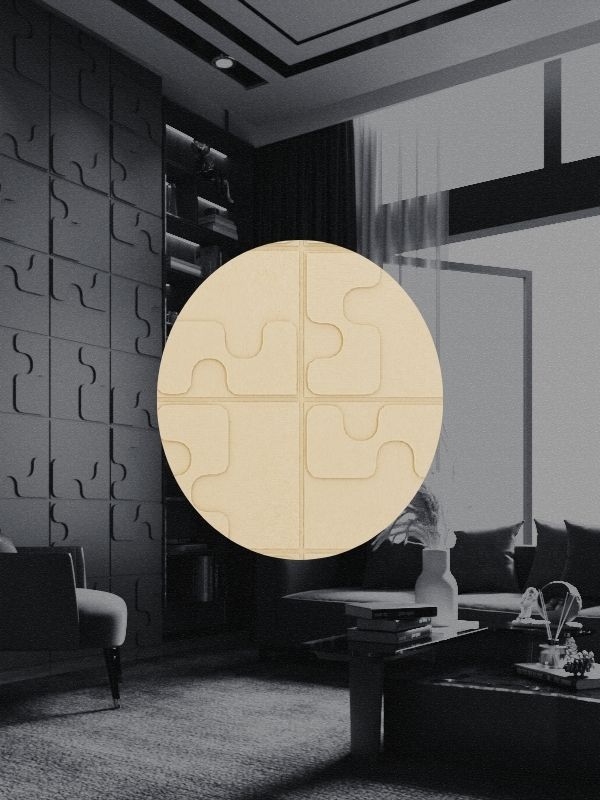
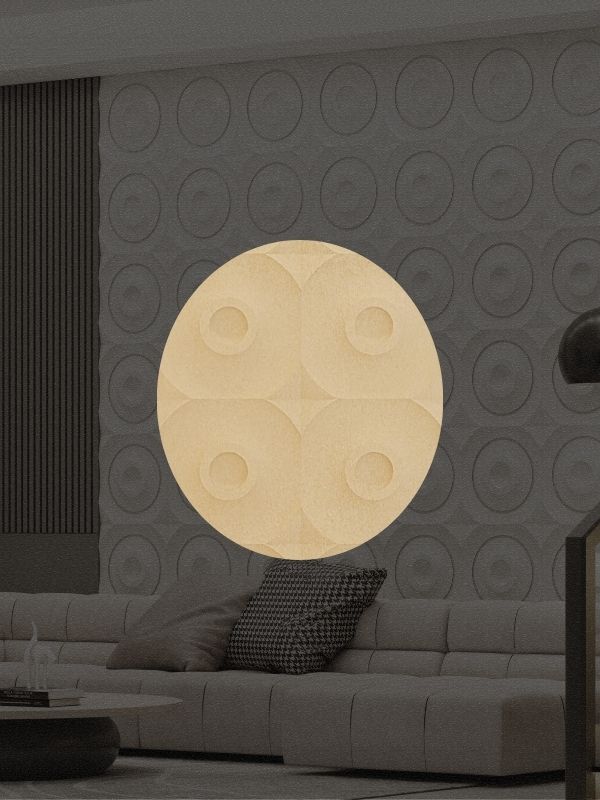
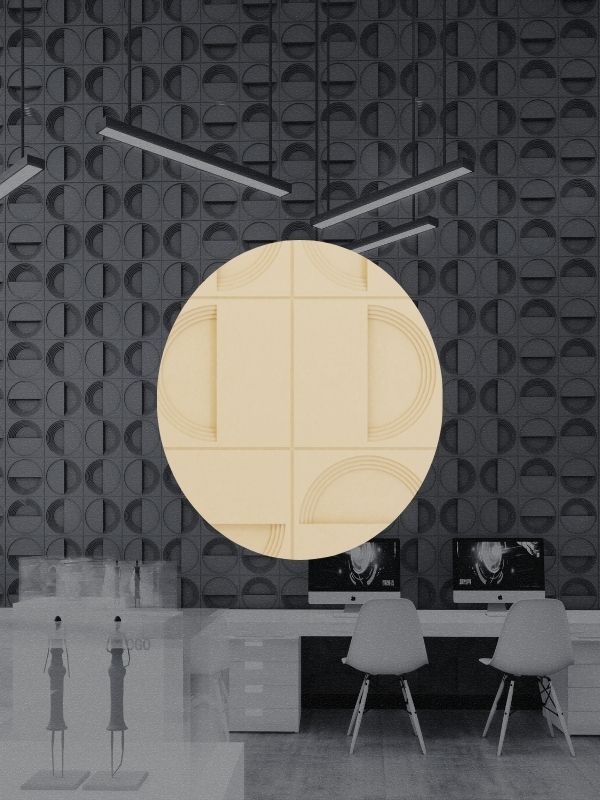
Fomra MDF relief systems are precision-machined architectural panels designed to introduce controlled depth, rhythm, and visual alignment across interior walls and ceilings in controlled environments. Patterns derive from geometry, repetition, and proportion, integrating as part of the architecture rather than applied ornament.
Manufactured from MDF substrates, each panel is CNC carved for consistent relief profiles, clean edges, and repeatable geometry. MDF’s uniform composition eliminates natural grain variation, enabling visually controlled patterns across large areas — ideal where precision, alignment, and finish consistency are priorities.
Patterns are engineered for modular alignment in horizontal and vertical directions, as detailed in specifications. This supports large-format applications on walls and ceilings, with relief depths calibrated from subtle to more pronounced profiles based on viewing distance and spatial context.
Fomra MDF relief systems suit interior wall and ceiling applications emphasizing surface control, scalability, and uniformity in architectural design.
All panels are developed and fabricated in-house, ensuring tight management of pattern geometry, panel layout, relief calibration, and production sequencing from concept to completion.

At Fomra, design and craftsmanship go hand in hand. Being based in North America lets us stay closely involved, communicate clearly, and oversee every step of fabrication.
Yes, in controlled interior environments. The uniform MDF substrate and modular design support overhead applications, adding texture and visual interest with aligned patterns. Final mounting methods, framing support, and suitability should be determined by qualified professionals based on site conditions and project requirements.
Carved textures may contribute to sound diffusion in open spaces and subtle thermal qualities, varying by installation and room setup. For specific acoustic or thermal performance needs, consult an engineer or acoustician.
Installation depends on the substrate, location, and project. Common methods include mechanical fasteners, clips, or suitable adhesives. We may provide layout references for planning, but final methods, coordination, acclimation (recommended 48+ hours in-site conditions), and code compliance remain the responsibility of qualified installers based on actual site factors. Professional installation is recommended for large-format or ceiling projects.
Yes — the smooth, uniform surface accepts paints. Priming is recommended for best adhesion and longevity. Final finishing choices and application remain the responsibility of qualified professionals to suit the environment and desired outcome.
Installation guides and sequencing references may be provided to support project planning. Final installation methods and coordination must be determined by qualified installers based on site-specific conditions. Professional installation is strongly recommended, particularly for large-scale or ceiling applications.
Our in-house CNC router can produce custom cuts, irregular shapes, cutouts, and project-specific adaptations that are feasible with standard CNC routing on MDF (e.g., through-cuts, partial-depth reliefs, outlet/window cutouts, curved edges, or mitered seams).
Limitations include: no undercuts, reverse reliefs, overhangs, or features requiring non-standard tooling.
To proceed:
This ensures precise sequencing, optimal fit, and minimal waste. Share sketches early—we'll confirm CNC feasibility quickly.
MDF panels are generally denser than some alternatives, with weight varying by thickness and size (typically moderate for standard architectural applications). Proper substrate support, fastening, and handling are essential - consult installers or engineers for load considerations, especially on ceilings or large spans.
Pricing is project-specific and based on factors like panel size, thickness, relief depth/complexity, quantity, custom cuts or adaptations, finishing requirements, and production needs. Contact us with project details (drawings, dimensions, scope) for an accurate quote - we provide transparent estimates during the quoting phase.
Key influences include:
Typical compatible methods include:
General Note for California Users: Products are intended for interior use and comply with applicable composite wood regulations (e.g., CARB Phase 2 / EPA TSCA Title VI formaldehyde emission standards) where required. Specifications are general and subject to change. Refer to our General Disclaimer and Terms and Conditions for important limitations, including that final suitability, installation, code compliance, and project-specific performance remain the responsibility of qualified professionals (architects, contractors, engineers). Actual results may vary based on installation, environment, and site conditions.